Advice
Hand model jobs are booked separately from the face campaign, cast at short notice and paid on their own terms. This is what the work is, who books it, what it pays and how to get on a board — written from the side of the desk that quotes the fees.
Published 11 September 2026
The work
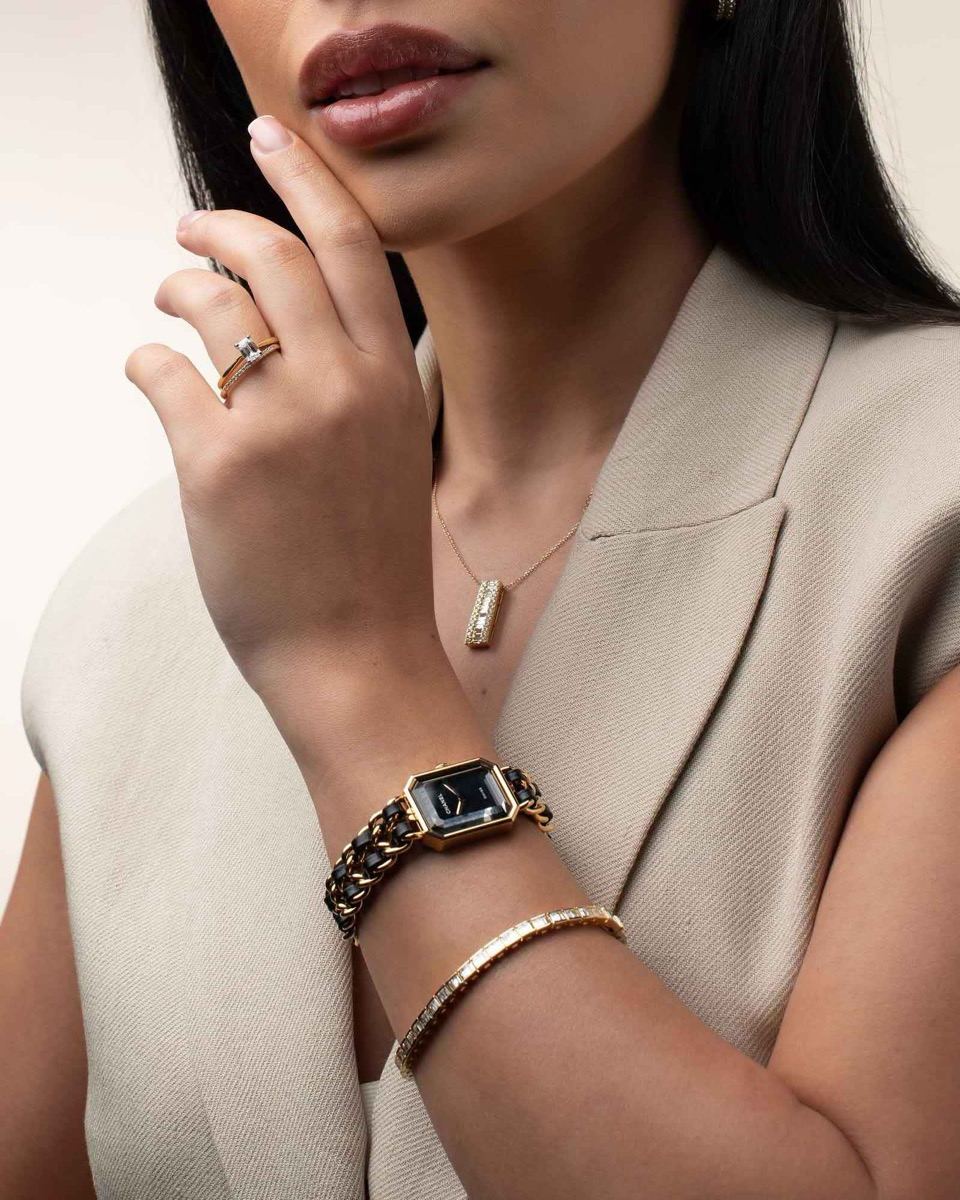
A hand model job is a booking where your hands are the subject of the shot. Not a background detail — the thing the camera is on. A watch fastened at the wrist, a serum pumped onto a fingertip, a phone held at an angle that flatters the screen, a fork lifting food towards a mouth that never appears in frame.
It is cast separately from the face campaign and paid separately. The model whose face appears in the wide shot is frequently not the person whose hands appear in the close-up, because the two jobs ask for different things. A face is cast for character. A pair of hands is cast for shape, skin and steadiness.
That separation is why hand model jobs exist as their own category, and why a working hand model can be booked by clients who would never book them for anything else.
The clients
Beauty and skincare is the largest single source of hand work. Every serum, every hand cream, every foundation swatch needs a pair of hands that photograph cleanly under hard light. Nail brands book constantly and often on short notice.
Jewellery and watches are the most technically demanding. A watch sits on a specific part of the wrist and the client will have a view on the bone structure underneath it. Rings need straight fingers and even nail beds.
Food and drink is steadier than most people expect — supermarkets, delivery apps, packaged goods. The hands pour, lift, break and pass, and the work is often shot in long days with many takes.
Technology and product is the volume lane. Phones, tablets, remotes, packaging. Much of it is e-commerce rather than campaign, which means lower day rates but far more repeat booking.
Pharmaceutical and healthcare sits slightly apart. It pays well, it often requires hands that read as ordinary rather than glamorous, and the usage terms are usually tighter.
The money
Hand work is quoted the same way as any other modelling booking: a fee for the shoot day, and a separate licence fee for the usage — where the images run, in which territories, and for how long. The two are priced independently and the usage is very often the larger number.
A day is eight hours including a one-hour meal break. Half days run to four hours. If the shoot is a commercial governed by APA terms the day is longer, and that is agreed before anyone is booked, never assumed on the day.
E-commerce and packaging work sits at the lower end and repeats. Beauty campaign and jewellery sits higher, particularly where the usage is broad. A national campaign with a long licence is a different conversation from a week of catalogue stills, even when the hands in both are identical.
Every fee we quote carries a 20% agency fee on top of the model's rate, and every licence states a start and an end date. We do not quote a day rate in isolation, because a day rate without its usage terms is not a price.
Getting cast
Most hand bookings never reach a public casting call. A client sends a brief, the agency sends a small set of hand portfolios, the client picks. That is the whole process, and it frequently runs inside a single day.
This is why being on a board matters more for hands than for almost any other category. The work moves too fast for an unrepresented model to hear about it, and clients do not want to source hands themselves.
When a casting does happen it is usually a short in-person session or a set of phone photographs sent the same afternoon. You will be asked for hands in natural light, front and back, fingers together and spread, with no rings and no nail varnish unless the brief says otherwise.
Turnaround is the defining feature of the category. A brief on Tuesday can shoot on Thursday. Models who answer quickly get booked more than models with better hands who answer slowly.
The standard
Even skin tone, clean and uniform nail beds, straight fingers and unmarked skin. Scars, prominent veins and bitten nails are the usual reasons a pair of hands is passed over, and none of them are moral failings — they are simply what the close-up shows.
Hand size matters relative to the product. A large hand makes a phone look small; a small hand makes a jar look large. Clients frequently ask for a specific proportion rather than a specific beauty standard, which is why the category is more open than people assume.
Age range is wider than face modelling. Mature hands are booked constantly for healthcare, insurance, pensions and family campaigns, and there is genuine demand for hands that read as lived-in rather than flawless.
Maintenance is the part nobody mentions at the start. Working hand models keep nails at a consistent length, use gloves for anything abrasive and treat sun exposure seriously, because a single burn can take a pair of hands out of contention for weeks.
Applying
Send four photographs taken on a phone in daylight: both hands palm down, both palms up, one hand holding an everyday object, and a full-length shot so we can see proportion. No filters, no retouching, no professional shoot required.
Tell us your glove size if you know it, your nail length, whether you have any visible scarring, and where you are based. Hand bookings are almost all London studio days, so travel time is a practical question rather than a barrier.
There is no fee to apply and no fee to be represented. If someone asks you to pay to join a board or to buy a portfolio as a condition of representation, that is not an agency arrangement.
We reply to every application. If your hands are not right for the work our clients are currently booking we will say so plainly rather than leave you waiting.
Frequently asked
A hand model is paid a fee for the shoot day plus a separate licence fee for the usage. The usage fee is priced on where the images run, in which territories and for how long, and on a campaign it is frequently larger than the day fee itself. E-commerce and packaging work pays less per day but repeats far more often than campaign work.
No. Hand work is one of the few modelling categories where a complete newcomer is booked on the strength of the hands alone. What clients need beyond the hands is reliability — answering quickly, arriving on time and holding a position steadily for a long take.
No. Four daylight photographs taken on a phone are what the booking team wants. Professional hand shots are something the agency arranges once you are on the board, not something you should be buying before anyone has seen you.
Almost never, and that is the point. Hand bookings are short, frequent and scheduled at speed, which makes the category workable alongside another job far more easily than face modelling.
Yes. Men's hands are booked for watches, technology, tools, automotive and food, and demand for male hands is steady rather than occasional. The standard is the same: even skin, clean nails, unmarked.
No. Mature hands are booked constantly for healthcare, finance and family campaigns, and the demand for hands that look lived-in is genuine. Hand modelling has a considerably wider age range than face modelling.
The famous insurance stories are largely mythology. What matters practically is upkeep — consistent nail length, gloves for abrasive work and sun protection, because a burn or a cut can rule you out of casting for weeks.
No models selected yet.
Tap the heart on any model card to add them to your shortlist.
Tell us what the shoot needs. We come back the same working day with options and a fee.
Your enquiry is with the booking desk. We reply the same working day, Monday to Friday.